
JADA® System

Fast Physiologic Control of Abnormal Postpartum Uterine Bleeding

Contact Us

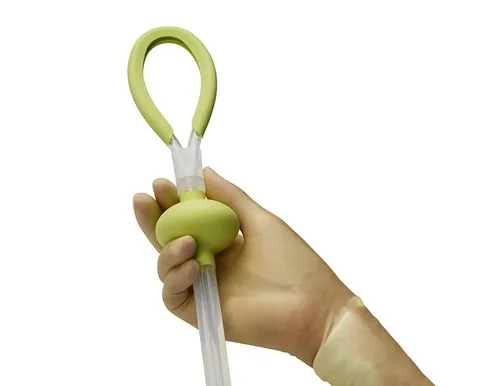
The JADA® System is an intrauterine device indicated to provide control and treatment of abnormal postpartum uterine bleeding or hemorrhage when conservative management is warranted. The JADA System uses low-level vacuum to stimulate physiologic uterine contraction and control bleeding. Supported by clinical evidence demonstrating rapid bleeding control, high effectiveness, and a favorable safety profile, JADA is designed to be easy to use and help clinicians respond quickly in the management of postpartum hemorrhage.

MKT-01784 [A]

Laborie Logo

Vacuum-Induced Hemorrhage Control

The JADA System can provide visible and observable control of bleeding within minutes.* Low-level vacuum (80 mm Hg +/- 10 mm Hg, not to exceed 90 mm Hg) induces physiologic contraction of the uterus to control and treat abnormal postpartum uterine bleeding or hemorrhage.1

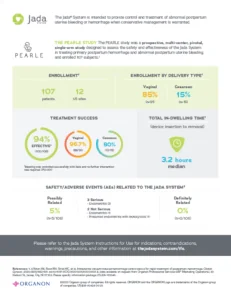
In a clinical study (n=107), contraction of the uterus was observed in a median of 1 minute with control of bleeding observed in a median of 3 minutes.1
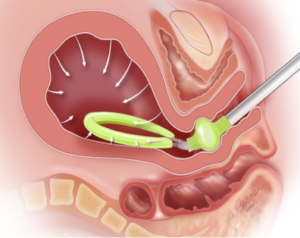
The JADA System with Low-level Vacuum Connected

The uterus is composed of a web-like network of muscle fibers in its middle layer, called the myometrium. When the placenta separates from the uterine wall after childbirth, that portion of the myometrium is left with open blood vessels, resulting in bleeding. Typically, the uterus contracts and compression of those open vessels stops bleeding. In some instances, the uterine muscle fibers do not contract, causing uncontrolled bleeding, referred to as abnormal postpartum uterine bleeding or postpartum hemorrhage.


Uterine Contraction with the JADA System
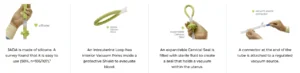
When connected to a low-level vacuum source (80 mm Hg +/- 10 mm Hg; not to exceed 90 mm Hg), JADA establishes a vacuum within the uterus, causing the uterus to contract and leading to control of the bleeding. In a clinical study (n=107), contraction of the uterus was observed in a median of 1 minute with control of bleeding observed in a median of 3 minutes.1

Read More: PEARLE Study I RUBY Study

Innovation That Works

Get to Know JADA

Laborie Logo

At controlling postpartum uterine bleeding

In the PEARLE study, 94% of participants met the primary end point: bleeding was controlled successfully with JADA, and no further intervention was required.1

(n=100/106)

Laborie Logo

Users said they would recommend JADA

Highly recommended among surveyed clinical investigators, in most cases using JADA for the first time.1

(n=104/107)

Laborie Logo

In nearly every case, investigators rated JADA easy to use

Highly recommended among surveyed clinical investigators, in most cases using JADA for the first time.1

(n=105/107)

Bleeding Was Controlled Within 3 Minutes

Laborie Logo

1 Minute

Uterine collapse observed (median time)2

Laborie Logo

3 Minutes

Bleeding Controlled (median time)2

Laborie Logo

3.2 Hours

Treatment completed and device removed (median time)2


Request More Info Or Set Up A JADA® Trial Today


Backed by Clinical Evidence and Real-World Outcomes

Used in more than 2,000 hospitals across the U.S., join the clinicians who trust JADA® for fast, effective PPH management.

  • Rapid Control of Abnormal Postpartum Uterine Bleeding:  94% effectiveness in controlling postpartum hemorrhage in the pivotal PEARLE study (n=100/106).1
  • High Clinician Satisfaction: 97% of investigators would recommend JADA. 98% said JADA was easy to use, even on first‑time use.1
  • Short Treatment Duration: Median treatment completion time: 3.2 hours, including device placement and removal.2


Frequently Asked Questions

94% (n=100) of subjects in the PEARLE  Study had bleeding controlled in less than 10 minutes.

Leave JADA in place with vacuum applied until bleeding is controlled for 1 hour and continue to assess if the patient’s uterus is firm, bleeding is controlled, and the patient is stable. Leave JADA in place with vacuum disconnected and fluid removed from the Cervical Seal for a minimum of 30 minutes and continue to check that the bleeding remains controlled, and the uterus remains firm.

Yes. Ensure the cervix is dilated to at least 3 cm before use of JADA and verify that the hysterotomy is closed prior to insertion. JADA should be placed transvaginally; do not place through the incision.

Leave JADA in place with regulated vacuum applied until bleeding is controlled for at least 1 hour, the uterus is firm, and the patient is stable. If patient transfer is necessary, it is up to the healthcare professional’s discretion and clinical judgment.

A portable vacuum can be used as long as it is a regulated vacuum source. It can be set to “continuous” suction, and it can be set to 80 mm Hg (+/- 10 mm Hg).

There is no current restriction around using lubrication with the JADA System.

Yes, if there is no purulent infection.

The tubing that is supplied with the JADA System can hold around 100 mL of blood/fluid.

JADA is indicated for single-patient use. Reinsertion is up to the healthcare professional’s discretion and clinical judgment.

Consider prophylactic antibiotics for prolonged use.

Ordering Information

Product Code Description Quantity
1047196 JADA System – Vacuum-Induced Hemorrhage Control (JADA-2002) 3 / box


References:

1. D’Alton ME, Rood KM, Smid MC, et al. Intrauterine vacuum-induced hemorrhage-control device for rapid treatment of postpartum hemorrhage. Obstet Gynecol. 2020;136(5):882-891. doi:10.1097/AOG.0000000000004138

2. Goffman DE, Rood KM, Bianco A, et al. Real-World Utilization of an Intrauterine, Vacuum-Induced, Hemorrhage-Control Device. Obstet Gynecol. 2023;142(5):1006-1016. doi:10.1097/AOG.0000000000005366

132340 – 1