

Do You Have Stress Urinary Incontinence? A Reality Check
Learn about stress urinary incontinence (SUI), including its causes, symptoms, and treatment options, and discover effective ways to manage bladder leakage and…

Is Accidental Bowel Leakage (ABL) taking over your life? Are you unable to do the things you want because of bowel control issues?
If you answer yes to any of the following questions, this could be the case:
You don’t have to let Accidental Bowel Leakage disrupt your life. The Eclipse™ System for Bowel Control provides women with a low-risk, non-surgical solution to help prevent accidental stool loss.
Learn more about Accidental Bowel Leakage from Dr. Holly Richter
Accidental Bowel Leakage (ABL), also called Fecal or Bowel Incontinence, affects over 10 million women1 in the U.S. It typically starts between ages 47 and 553 but can start as early as the 20s2. ABL becomes more common in women as they reach their 50s, 60s, and 70s2. It can greatly impact quality of life, leading to social isolation and a higher need for long-term care4. The financial costs can also be high, with average yearly medical expenses around $2,4005. If surgery for a neuromodulation implant is needed, the cost can go up to about $36,0006.
Fecal Incontinence can be caused by many factors, such as birth defects, nerve issues, muscle damage, or pelvic injuries3. For example, the muscles supporting the bladder, rectum, and uterus can weaken or get damaged due to pregnancy, childbirth, pelvic injury, aging, and other reasons. Further, having one pelvic floor disorder is linked to a higher risk of having others. In a study, 57% of women with Urinary Incontinence also had Fecal Incontinence or Accidental Bowel Leakage7
People with Accidental Bowel Leakage may experience:
Living with Accidental Bowel Leakage may involve:
Alarmingly, most women with Accidental Bowel Leakage do not seek care. In a study, approximately 70%8 of women with Accidental Bowel Leakage chose not to discuss the condition with their physicians.
Reasons for not speaking up may include the following:
Treatment Options for Accidental Bowel Leakage
Treating Accidental Bowel Leakage is not just about managing the symptoms, but also about helping women regain their independence and confidence to live without anxiety or embarrassment. Unfortunately, there have been few effective treatments for bowel control issues.
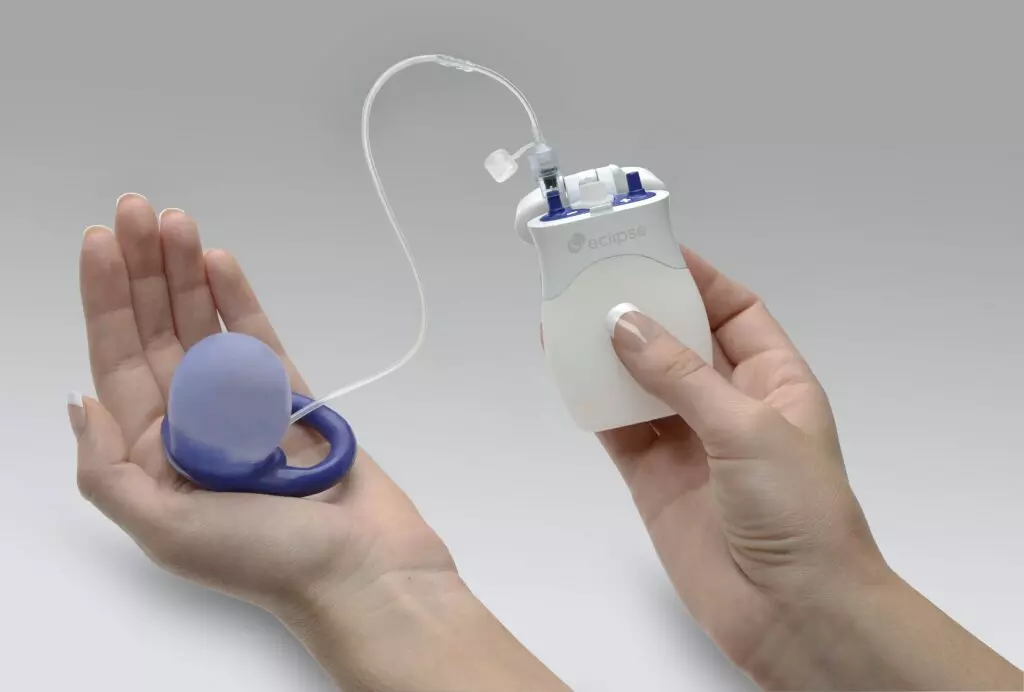 Eclipse System for Bowel Control
The Eclipse System is a newer, FDA cleared, and non-surgical option for treating Accidental Bowel Leakage in women. It works as well as surgically implanted nerve stimulation devices3 like Axonics or InterStim. Eclipse is available by prescription and can be conveniently fit in a doctor’s office. It’s designed for adult women with Accidental Bowel Leakage and can be used alone or with other treatments to improve bowel control.
Click to learn more about Eclipse: The Eclipse System How it Works (youtube.com)
How does Eclipse work?
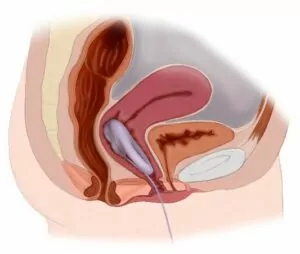
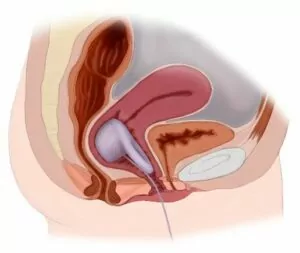
Eclipse is a removable vaginal insert with a small balloon that gently presses on the rectum to stop stool from passing. Placed in the same location as a tampon, the patient inflates the insert’s balloon to prevent stool from passing using a separate small pump. When it’s time for a bowel movement, the patient deflates the balloon with the same pump, allowing stool to pass normally. Afterward, the balloon is reinflated to block stool again. The separate pump is compact and can be easily stored in a handbag.
Learn more about how the Eclipse Insert works:
How the Eclipse System Works – An Interview with Dr Holly Richter (youtube.com)
UNINFLATED DEVICE for bowel movement INFLATED DEVICE to prevent stool leakage
Accidental Bowel Leakage may be treated by different types of doctors depending on the cause. Here are the specialists who may help:
If you are a woman with Fecal Incontinence and have no vaginal infections or open wounds, you may be a candidate for Eclipse. In the LIBERATE study, 62% of women were successfully fit4. Since Eclipse is a non-invasive option, it can be tried before considering more invasive treatments like surgery. Eclipse is easily removable, making the therapy low risk and reversible.
Patient Experiences with Eclipse:
Women share their personal experiences with Eclipse (youtube.com)
How do I get fit with Eclipse?
Getting fit for Eclipse is done conveniently from your doctor’s office. First, your healthcare provider will check your vaginal health to make sure you’re ready for Eclipse. In some cases, they might prescribe an estrogen cream beforehand to improve tissue health.
Once you’re ready, your doctor will use sizing rings (similar to those used for a pessary) to find the right size insert for you. Then, a temporary, disposable Eclipse Trial Insert will be used to confirm the overall insert fit. Different sizes can be tried to ensure it’s comfortable and effective for your body.
Your doctor may let you use the Trial Insert at home for up to two weeks to see how it fits, how comfortable it is, and how well it works for you. If the trial is successful, you’ll receive your long-term Eclipse Insert, which lasts for 12 months. After a year, you’ll return to the doctor for a replacement.
Eclipse Effectiveness
The Eclipse system has been tested in over 200 women10.
In the LIFE study3, 86% of women reported treatment success* after 1 month of use. The average number of Fecal Incontinence episodes dropped from 5.8 per week before Eclipse to 1.1 per week after Eclipse at 1 month with 41% of participants having no accidents. Eclipse not only reduced accidents but also improved bowel control symptoms. These symptom improvements included less urgency, less incomplete bowel movements, less frequent bowel movements, and less liquid stool3.
In the longer-term LIBERATE study4, 84% of women reported success* at 3 months, and 94% of those who continued in the study reported success at 12 months. The number of Fecal Incontinence episodes went from 7.1 per week before Eclipse to 1.5 per week at 3 months, 1.1 per week at 6 months, and 0.9 per week at 12 months after Eclipse4. At the end of the 12-month study, 46% of women reported no Fecal Incontinence episodes4.
The fit rate for Eclipse during the LIBERATE study was 62%4, meaning it won’t work for everyone. However, because Eclipse is non-surgical and can be tried in a doctor’s office before committing, it’s easy to see if it works for you. In the LIFE study, 96% of women found Eclipse “comfortable or could not be felt”, and 98% said they would recommend it to a friend3.
Eclipse Safety
Eclipse has been proven to be safe and low risk in several clinical studies, including the LIFE3 and LIBERATE4 studies. No serious device-related adverse events were reported. However, some women did experience mild adverse events**. In the LIFE study, the most common issue was “pelvic cramping or discomfort”, mostly during the fitting period3. The next most common issues were urinary incontinence “or urinary urgency or frequency”. In the LIBERATE study4, the “most common adverse event was vaginal wall injury, with most adverse events occurring during fitting period.” None of these events caused women to leave the LIBERATE study.
Summary
Eclipse is a low-risk, non-surgical, and highly effective solution for Accidental Bowel Leakage. With just a simple visit to your doctor’s office, you could regain bowel control. Unlike surgically implanted devices, Eclipse is easily placed and removed, so you can use it as needed. It can also be combined with other bowel control treatments to give you more confidence in your daily life.
Talk to your doctor today to see if Eclipse is right for you.
Do you need help finding a physician to treat your Accidental Bowel Leakage? Try our Find A Provider tool or contact us directly via Laborie Contact Form.
For more information from physicians and patients, explore our interactive Eclipse experience below.
The inability to control your bowels which results in the leakage of stool – also known as Fecal Incontinence (FI) or a loss of bowel control or bowel incontinence.
The cause of Accidental Bowel Leakage can have several origins including nerve or muscle damage in the pelvic region which can affect bowel control, as can diarrhea, Irritable Bowel Syndrome (IBS) or other gastrointestinal conditions. Prior childbirth is also associated with Accidental Bowel Leakage.
Eclipse is a vaginal insert, placed in the same location as a tampon. The Insert has a balloon on it, which can be inflated to prevent stool from passing. A small, detachable pump is used to inflate and deflate the balloon. When you’re ready to have a bowel movement, you simply deflate the balloon. There is no need to remove the insert. Once you have finished your bowel movement, inflate the balloon again and go on your way.
The Eclipse System is indicated for the treatment of fecal incontinence in adult women. It is intended for prescription use. It should not be placed while there is a current vaginal infection or open vaginal wound.
Eclipse was cleared by the FDA in 2015 and is prescribed by physicians with knowledge in the evaluation of pelvic floor anatomy. Thus, Eclipse is currently not available OTC.
The Eclipse System (insert and pump) should be replaced yearly by your healthcare provider.
Many women who use Eclipse are sexually active. You should remove the insert prior to vaginal intercourse.
No studies have been conducted of women who use a tampon while wearing Eclipse. You should remove any tampons or other vaginal inserts prior to inserting Eclipse.
Your physician will need to see you to assess whether Eclipse will be a good option for you.
You cannot use Eclipse and a pessary at the same time. In addition, the Eclipse system is not intended to replace your pessary. Your physician will need to see you to evaluate what’s most appropriate for your body and overall treatment needs.
There are detailed cleaning instructions in the Eclipse System User Guide. You can use soap and water to clean your insert. You should remove the insert to clean it at least once a week or daily if worn during menstruation.
Eclipse contains metal and so must be removed before undergoing an MRI, in order to prevent any potential adverse events that may occur due to heating or movement of the Insert during the MRI. Eclipse is designed to be removed by patient when needed including for medical procedures or for periodic cleaning.
The safety and effectiveness of the Eclipse System have not been evaluated in patients with pelvic organ prolapse beyond the plane of the hymen or who are pregnant. Stage 1 or 2 prolapse will typically be OK with Stage 3 being more difficult to successfully fit.
The use of the Eclipse System after a recent hysterectomy may compromise the integrity of the vaginal cuff repair.
Eclipse has Medicare coverage under HCPCS Code A4563. The patient responsibility will vary depending upon your type of coverage including supplemental insurance. Private Pay insurance coverage will vary. Your physician’s office can help work with your insurance provider to determine eligibility and coverage amounts including getting a prior authorization.
Learn more about using Eclipse from Meghann Scott, RN:
Visit our Find A Provider tool to find your local trained physician.
Study definitions:
*Study success criteria defined as at least a 50% reduction in fecal incontinence episodes in the post-Eclipse period versus the pre-Eclipse period.3,4
**Adverse event definitions:
Learn about stress urinary incontinence (SUI), including its causes, symptoms, and treatment options, and discover effective ways to manage bladder leakage and…

Discover how collaborating with industry partners during fellowship can expand learning opportunities, support professional growth, and help shape future clinical practice.

Learn how to identify pelvic organ prolapse during urodynamic testing and explore effective treatment strategies to improve patient outcomes.