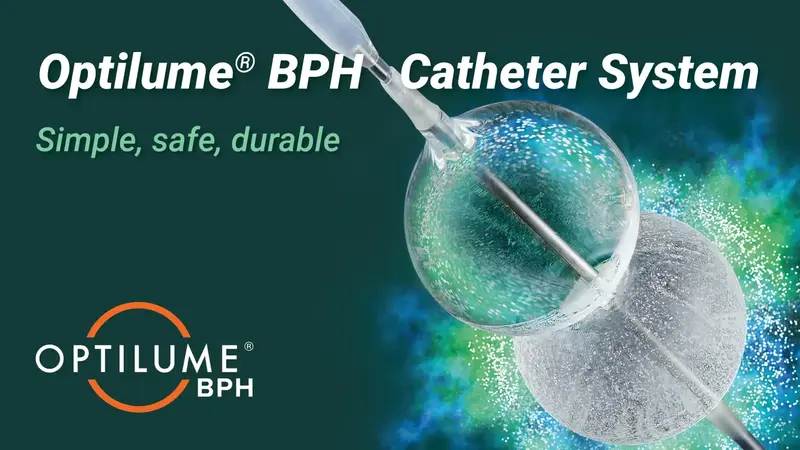
Find out how people are treating enlarged prostate without the long recovery, retreatments, and sexual dysfunction.

About 48 million people with enlarged prostates aren’t getting treatment beyond symptom management and watchful waiting.(1,2) Not because they don’t want to.
They fear the risks more than they want relief, or they’re worn down from cycling through options that haven’t meaningfully helped them.
Optilume® BPH can help.

Totally painless. Recovery was a very short time, no issues there whatsoever.
Go for it and do Optilume. Don’t think about it, because this is success.
It’s been almost exactly two months ago since I had the Optilume procedure and it’s just changed my life. It’s been wonderful.
BPH treatment isn’t a simple ladder from “bad” to “good.” It’s worth asking your provider about Optilume® BPH if you want:

A minimally invasive option

Shorter recovery time

No permanent implant

No sexual side effects

Lasting flow improvement
That’s completely normal, click the button below to talk to an Optilume® specialist
Optilume® BPH is a minimally invasive procedure with surgery-like results.
It combines the minimally invasive approach and typically shorter recovery associated with MIST therapies with durable clinical outcomes, helping patients achieve meaningful, lasting symptom improvement without more invasive surgery.
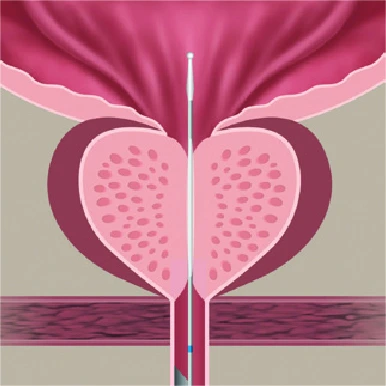
Step 1 — Insertion
Custom sizing to individual patient prostatic anatomy for optimal outcomes.
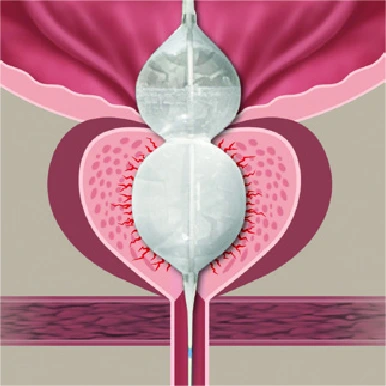
Step 2 — Dilation
Transurethral delivery of the Optilume® BPH semicompliant pre-dilation balloon to the enlarged prostate.
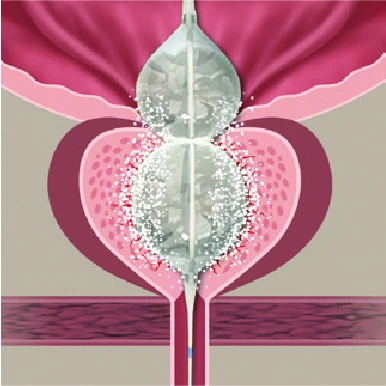
Step 3 — Drug Delivery
Inflation of the drug-coated balloon, creates an anterior commissurotomy (split) and concurrently delivers an anti-mitotic pharmaceutical agent, paclitaxel. Then the balloon comes out. Nothing stays inside the body.
It combines the minimally invasive approach and typically shorter recovery associated with MIST therapies with durable clinical outcomes, helping patients achieve meaningful, lasting symptom improvement without more invasive surgery.
19ml/sec
Flow rate at 5 years³,⁴
53%
Decrease in negative patient symptom scores³,⁴
20%
Decrease in urine remaining in bladder after urinating³,⁴
Benign prostatic hyperplasia occurs due to the natural aging process and hormonal changes, particularly an increase in levels of dihydrotestosterone (DHT).
Benign prostatic hyperplasia (BPH) is a non-cancerous enlargement of the prostate gland, which can lead to urinary symptoms such as frequent urination, weak urine flow, and incomplete bladder emptying.
While benign prostatic hyperplasia itself is not considered dangerous, it can cause bothersome urinary symptoms and, in some cases, lead to complications such as urinary tract infections, bladder stones, or kidney damage if left untreated.
Benign prostatic hyperplasia is commonly associated with age and hormonal changes, specifically an increase in DHT levels.
Yes, benign prostatic hyperplasia is treatable. There are various treatment options available, ranging from medication to minimally invasive procedures and surgery. Optilume® BPH Catheter System is a minimally invasive procedure with quick recovery time, and immediate symptom relief that is durable.
BPH affects 70% of men 60-69 years of age and 80% of those 70 years of age or older⁵. Men experiencing BPH symptoms such as frequent trips to the bathroom and the urgent need to urinate should contact their healthcare provider to see if Optilume® BPH is an option. Visit our Find A Provider tool to find a local Optilume® BPH trained physician.
Expect to see some blood in your urine or semen after the procedure. This may come and go during recovery and usually improves within 8 weeks. Small blood clots may also occur. Some patients may temporarily experience urine leakage or difficulty urinating.

Optilume® BPH is a minimally invasive procedure with surgery-like results.
“It combines the minimally invasive approach and typically shorter recovery associated with MIST therapies with durable clinical outcomes, helping patients achieve meaningful, lasting symptom improvement without more invasive surgery.”
It’s a walk-in/walk-out procedure, with operating room time typically lasting 30 minutes or less, with little-to-no pain. After treatment, it’s normal to see some blood in your urine or semen for a short time
1. Bruskewitz R. Management of symptomatic BPH in the US: who is treated and how? Eur Urol. 1999;36 Suppl 3:7-13. doi: 10.1159/000052343. PMID: 10559625.
2. MICHAEL J. ARNOLD, MD, ANDREW GAILLARDETZ, MD, AND JAFAR OHIOKPEHAI, MD. Benign Prostatic Hyperplasia: Rapid Evidence Review
3. Kaplan, Steven; Pichardo, Merycarla; Rijo, Edwin; Lay, Ramon Rodriguez; Espino, Gustavo; Estrella, Rafael MP76-02 AT 4 YEARS, OPTILUME BPH HAS THE HIGHEST SUSTAINED IMPROVEMENT IN PEAK FLOW (QMAX) OF ANY MINIMALLY INVASIVE BPH THERAPY, Journal of Urology: April 2023 – Volume 209 – Issue Supplement 4, doi: 10.1097/JU.0000000000003350.02
4. Kaplan, Steven A.*; Moss, Jared; Freedman, Sheldon; Coutinho, Karl; Wu, Ning; Efros, Mitchell; Elterman, Dean; D’Anna, Richard; Padron, Osvaldo; Robertson, Kaiser J.; Lawindy, Samuel; Mistry, Sandeep; Shore, Neal; Spier, Jeffrey; Kaminetsky, Jed; Mazzarella, Brian; Cahn, David; Jalkut, Mark; Te, Alexis The PINNACLE Study: A Double-blind, Randomized, Sham-controlled Study Evaluating the Optilume BPH Catheter System for the Treatment of Lower Urinary Tract Symptoms Secondary to Benign Prostatic Hyperplasia, Journal of Urology: September 2023 – Volume 210 – Issue 3, doi: 10.1097/JU.0000000000003568
5. Berry SJ, Coffey DS, Walsh PC, Ewing LL. The development of human benign prostatic hyperplasia with age. J Urol. 1984 Sep;132(3):474-9. doi: 10.1016/s0022-5347(17)49698-4. PMID: 6206240.
MKT-02559 [A]